

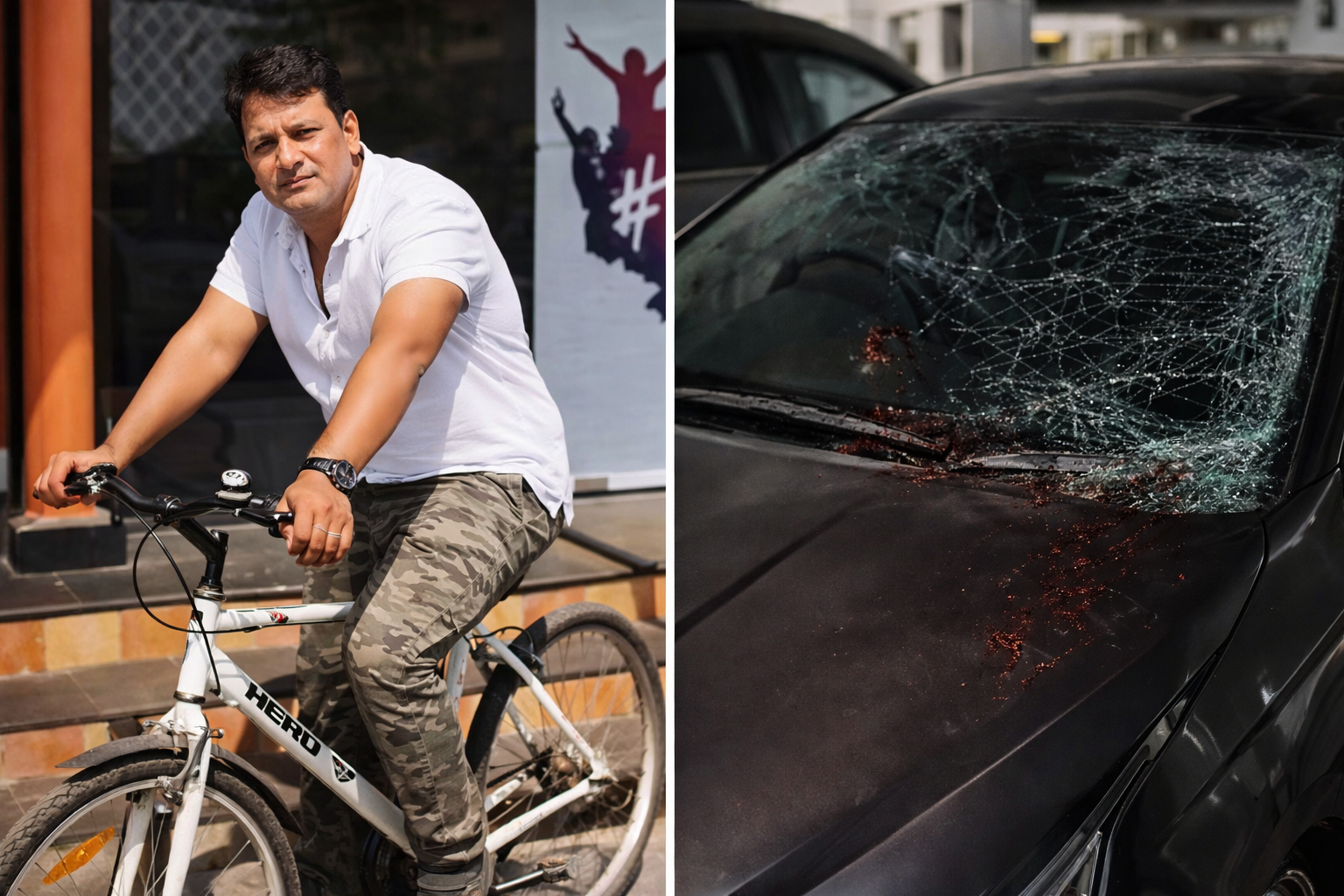
The tragic death of a cyclist in Kalyan, struck by a speeding car driven by a minor, has reignited urgent concerns about cycling safety in India. This heartbreaking incident underscores the vulnerabilities faced by cyclists on Indian roads and highlights the pressing need for stronger infrastructure and governance.
The Safety Challenge for Cyclists
Cyclists across India often navigate roads that are ill-equipped to protect them. The absence of dedicated cycling lanes, poor road maintenance, and reckless driving by motor vehicles combine to create a hazardous environment. The Kalyan accident, occurring on an unfinished and poorly regulated stretch of road, is a stark reminder of these dangers.
CCTV Footage Highlights the Tragedy
CCTV footage of the Kalyan accident, published by Republic World, shows the devastating moment when the cyclist was struck by the speeding car. The video serves as a sobering reminder of the dangers cyclists face daily and underscores the urgent need for safer roads and stricter enforcement.
Video credit: Republic World
Need for Dedicated Cycling Infrastructure
Experts and cycling advocates emphasize that cities must prioritize the development of dedicated cycling lanes, physically separated from motor traffic. Proper signage, adequate lighting, and regular maintenance are essential to ensure safety. Such infrastructure not only protects cyclists but also encourages more people to adopt cycling as a sustainable, eco-friendly mode of transport.
Governance and Enforcement
Infrastructure alone is not enough. Effective governance is crucial to enforce traffic laws that protect cyclists. Strict penalties for reckless driving, particularly in areas frequented by cyclists, are necessary. Authorities must also curb underage driving and irresponsible behavior through vigilant monitoring and community awareness programs.
Promoting a Cycling Culture
Beyond infrastructure and enforcement, fostering a culture of respect for cyclists is vital. Public awareness campaigns, school education, and community engagement can help shift attitudes and reduce conflicts between cyclists and motorists. Promoting cycling as a healthy, green, and inclusive mode of transport can transform urban mobility.The loss of a cyclist in Kalyan is a tragic wake-up call for India’s urban planners, policymakers, and citizens. Investing in safer cycling infrastructure and robust governance is not just about preventing accidents—it’s about building healthier, greener, and more inclusive cities.










Leave a Reply