

Global Cycling Network Tech Desk
Frankfurt | June 20 2026
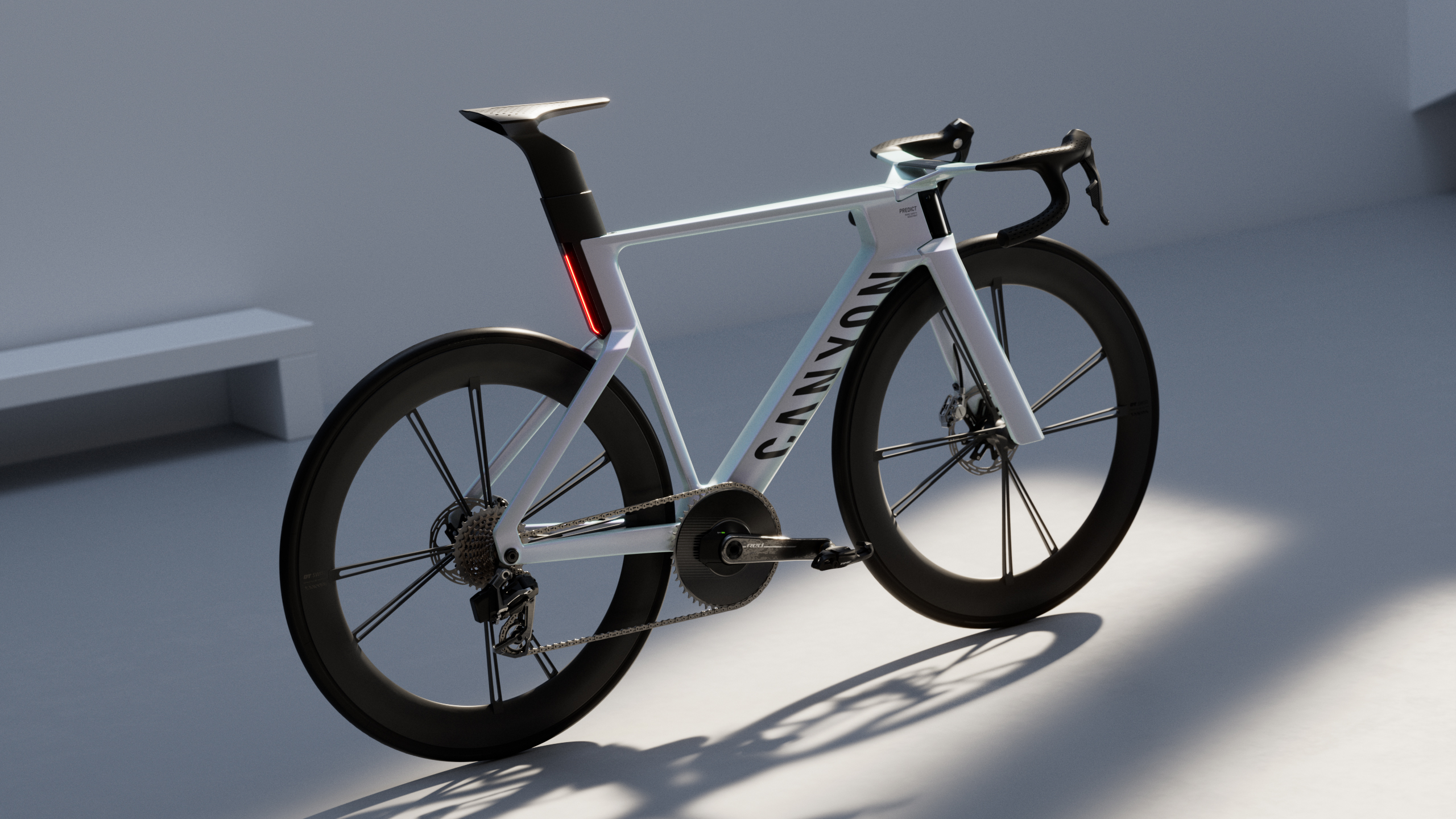
As the international cycling community prepares to gather for Eurobike 2026 in Frankfurt, direct-to-consumer pioneer Canyon has stolen an early march by unveiling a radical new prototype designed to shift cycling safety from reactive to predictive. Dubbed the Canyon Predict, the concept bike leverages onboard artificial intelligence, radar, and a 360-degree sensor array to anticipate road hazards before they ever catch a rider off guard.
While the automotive sector has spent the last decade integrating sophisticated active safety suites to drive down motorist fatalities, cycling safety infrastructure has largely lagged behind. Statistics provided by the German Federal Statistical Office (Destatis) underscore the urgency: in 2025, one in six people killed in German road traffic was a cyclist. Canyon’s new platform directly targets this disparity.
y Global Cycling Network Tech DeskFrankfurt | June 18, 2026As the international cycling community prepares to gather for Eurobike 2026 in Frankfurt, direct-to-consumer pioneer Canyon has stolen an early march by unveiling a radical new prototype designed to shift cycling safety from reactive to predictive. Dubbed the Canyon Predict, the concept bike leverages onboard artificial intelligence, radar, and a 360-degree sensor array to anticipate road hazards before they ever catch a rider off guard.While the automotive sector has spent the last decade integrating sophisticated active safety suites to drive down motorist fatalities, cycling safety infrastructure has largely lagged behind. Statistics provided by the German Federal Statistical Office (Destatis) underscore the urgency: in 2025, one in six people killed in German road traffic was a cyclist. Canyon’s new platform directly targets this disparity.AI That Sees What You Can’tThe design team behind the Predict set out to preserve the pure, unadulterated feel of a premium high-performance road bike while quietly blanketing the rider in an intelligent safety net. Rather than offloading computational heavy lifting to cellular networks—which introduces critical latency—the bike utilizes Edge AI to process data instantly right on the machine.The system relies on data fusion from several key areas:360° Multi-Modal Sensing: Onboard cameras and integrated radar continuously map surrounding traffic, tracking vehicle speeds and trajectories.Distributed Motion Hubs: A multi-dimensional motion sensor housed in the DT Swiss front wheel hub measures subtle telemetry shifts like steering angle, chassis stability, and speed.Augmented Ecosystem: The machine pairs with Canyon’s companion prototype, the Stingr Smart helmet, pushing vital data visualization directly onto a drop-down augmented-reality visor.When the bike detects an intersecting vehicle path, an unsafe closing speed within a group ride, or loose gravel through a blind turn, it assigns an instantaneous risk score. This is fed back to the cyclist via intuitive, non-distracting haptic pulses in the handlebars, localized directional warning lights, and HUD alerts on the in-handlebar display.Moving Beyond Simple AlertsCrucially, the Predict platform doesn’t just beep at danger; it introduces adaptive hardware interventions. If a catastrophic event or collision scenario crosses a high-risk threshold, the bike can automatically prompt active safety adjustments—such as remotely dropping the seatpost. This action rapidly lowers the rider’s center of gravity to enhance stability, offering them a fighting chance to maintain control and avoid a crash entirely.The industry-shifting concept is drawing praise from the upper echelons of professional racing. Tour de France Femmes champion Kasia Niewiadoma-Phinney noted:”I train and race on the road a lot, and there are plenty of times where data about my bike and safety measures about other road users would be welcome. Improving how safe you feel benefits everyone. It makes me eager to see where the next generation of bikes can go.”Cycling enthusiasts, tech heads, and safety advocates will get their first look at the working prototype when it makes its public debut at the Canyon exhibition stand (Hall 11.0, Stand B50) at Eurobike in Messe Frankfurt from June 24 to 27, 2026.Keywords: Canyon Predict bike, futuristic prototype bicycle, Eurobike 2026, cycling safety tech, Edge AI road bike, smart helmet technology, predictive bicycle radar.AI That Sees What You Can’t
The design team behind the Predict set out to preserve the pure, unadulterated feel of a premium high-performance road bike while quietly blanketing the rider in an intelligent safety net. Rather than offloading computational heavy lifting to cellular networks—which introduces critical latency—the bike utilizes Edge AI to process data instantly right on the machine.

The system relies on data fusion from several key areas:
- 360° Multi-Modal Sensing: Onboard cameras and integrated radar continuously map surrounding traffic, tracking vehicle speeds and trajectories.
- Distributed Motion Hubs: A multi-dimensional motion sensor housed in the DT Swiss front wheel hub measures subtle telemetry shifts like steering angle, chassis stability, and speed.
- Augmented Ecosystem: The machine pairs with Canyon’s companion prototype, the Stingr Smart helmet, pushing vital data visualization directly onto a drop-down augmented-reality visor.
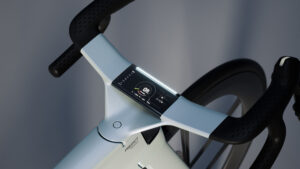
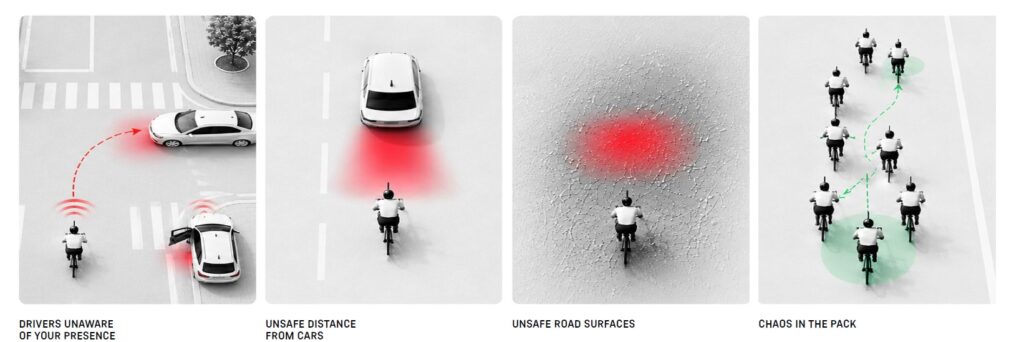
When the bike detects an intersecting vehicle path, an unsafe closing speed within a group ride, or loose gravel through a blind turn, it assigns an instantaneous risk score. This is fed back to the cyclist via intuitive, non-distracting haptic pulses in the handlebars, localized directional warning lights, and HUD alerts on the in-handlebar display.
Moving Beyond Simple Alerts
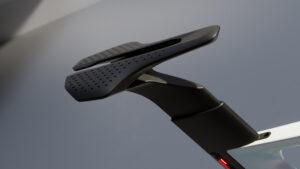
Crucially, the Predict platform doesn’t just beep at danger; it introduces adaptive hardware interventions. If a catastrophic event or collision scenario crosses a high-risk threshold, the bike can automatically prompt active safety adjustments—such as remotely dropping the seatpost. This action rapidly lowers the rider’s center of gravity to enhance stability, offering them a fighting chance to maintain control and avoid a crash entirely.
The industry-shifting concept is drawing praise from the upper echelons of professional racing. Tour de France Femmes champion Kasia Niewiadoma-Phinney noted:
“I train and race on the road a lot, and there are plenty of times where data about my bike and safety measures about other road users would be welcome. Improving how safe you feel benefits everyone. It makes me eager to see where the next generation of bikes can go.”
Cycling enthusiasts, tech heads, and safety advocates will get their first look at the working prototype when it makes its public debut at the Canyon exhibition stand (Hall 11.0, Stand B50) at Eurobike in Messe Frankfurt from June 24 to 27, 2026.
Keywords: Canyon Predict bike, futuristic prototype bicycle, Eurobike 2026, cycling safety tech, Edge AI road bike, smart helmet technology, predictive bicycle radar.









Leave a Reply