

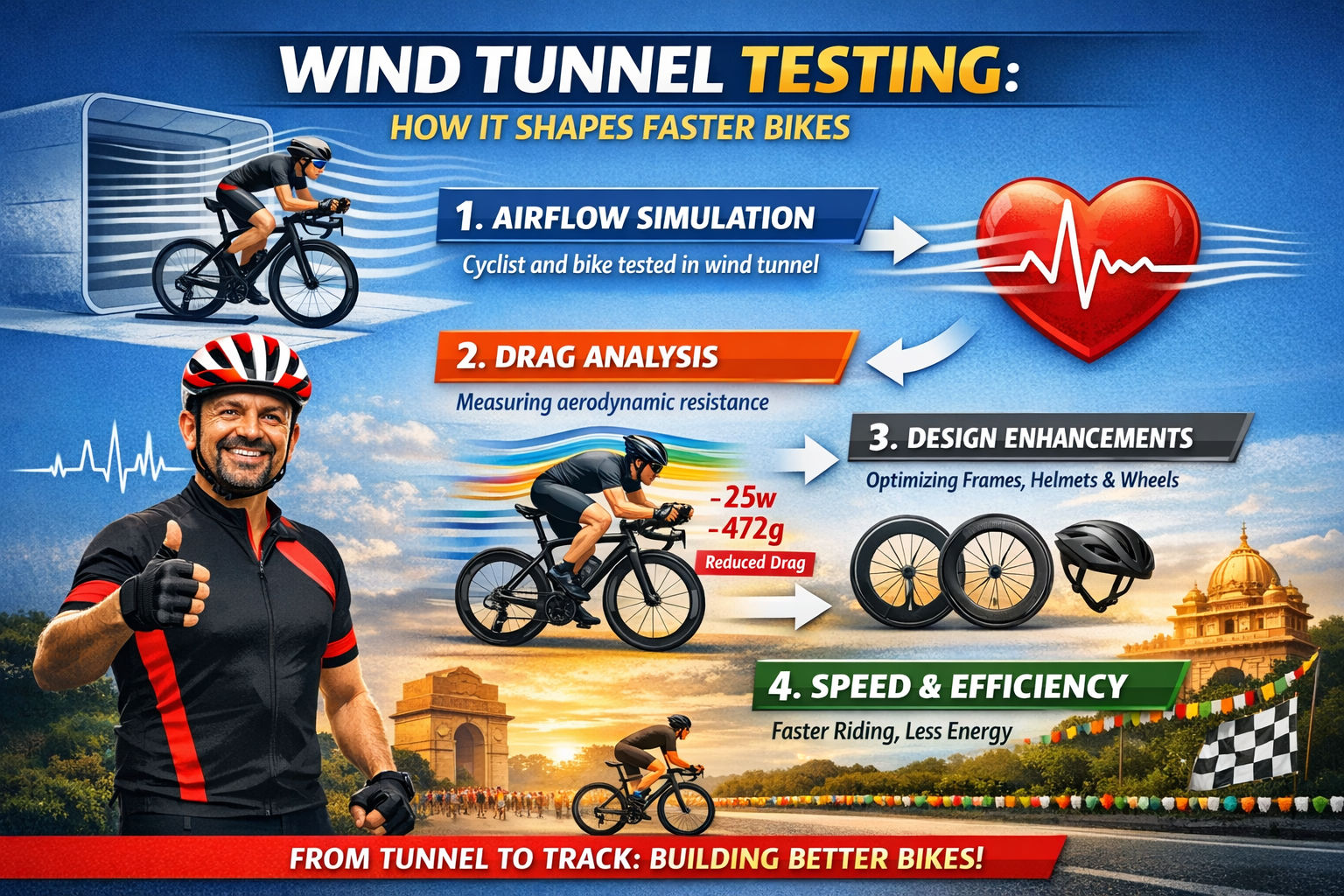
Wind tunnel testing simulates airflow around a cyclist and their bike in a controlled environment. It allows designers to measure drag, turbulence, and air resistance—critical factors that affect speed and energy efficiency.
- Drag is the force that slows a cyclist down.
- Aerodynamic optimization reduces drag, helping riders go faster with less effort.
- Tunnel tests replicate real-world wind conditions, allowing precise adjustments to frame shapes, rider positions, helmets, and gear.
🧪 Why It Matters for Bike Design
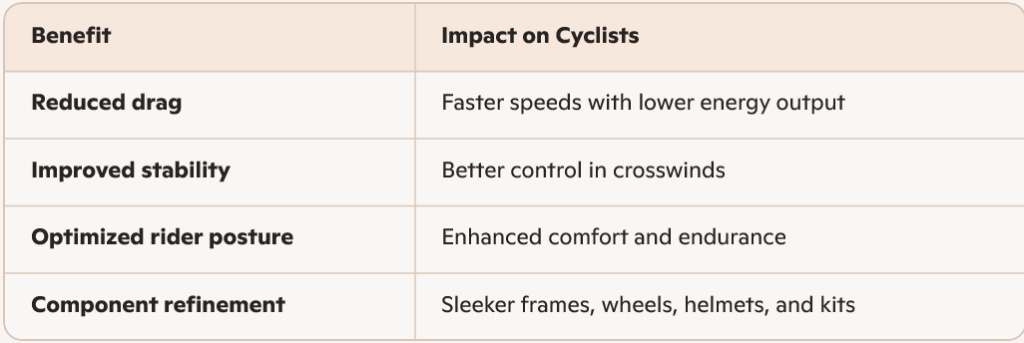
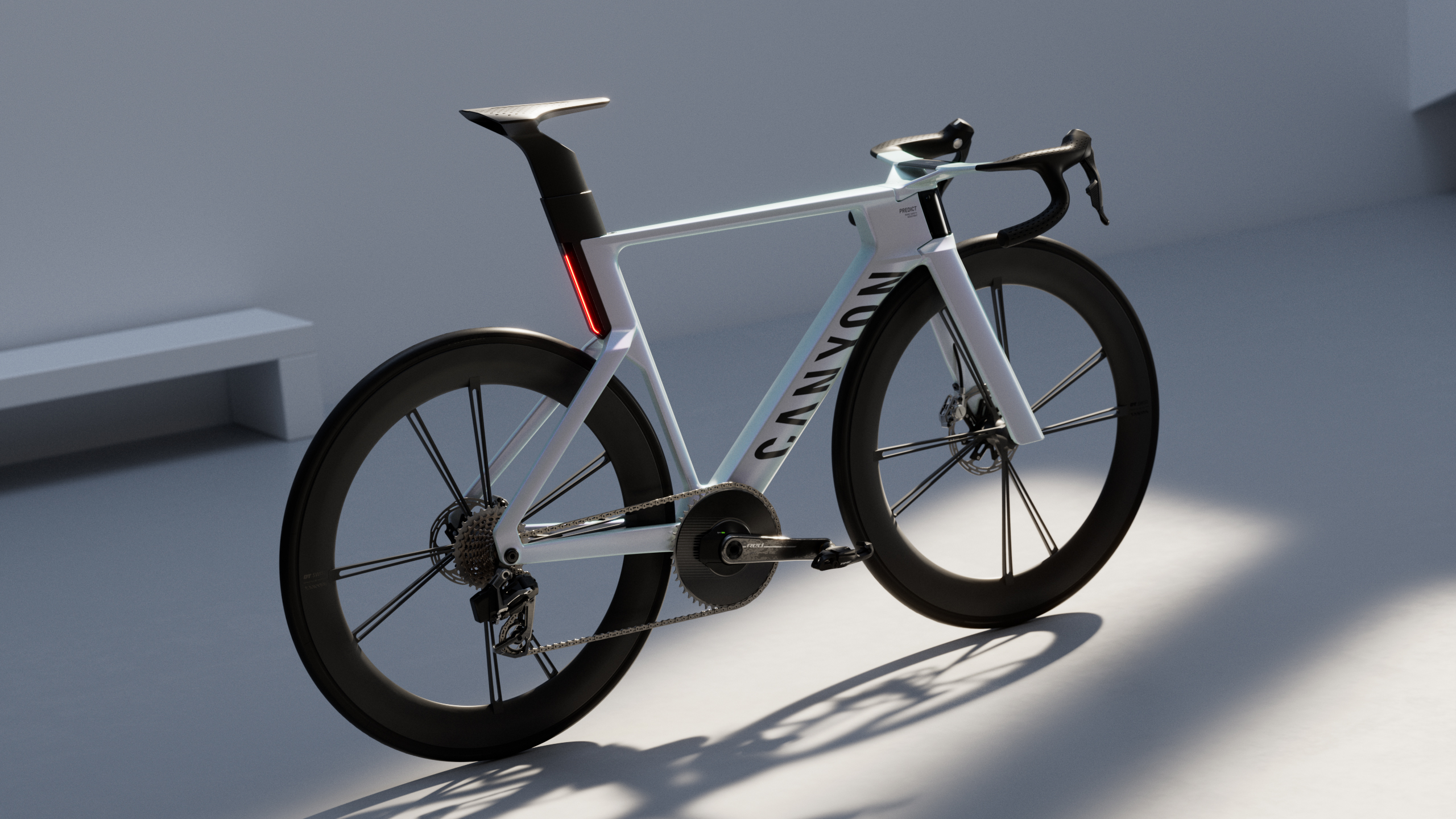
Wind tunnel data helps engineers tweak every curve and angle—from the fork to the seat post—to create bikes that slice through air more efficiently.
🕒 Timeline of Wind Tunnel Use in Cycling
🌍 Why It’s Relevant for India
India’s cycling scene is evolving—from leisure rides to competitive racing. As local brands like Firefox, Ninety One, and TI Cycles aim for global standards, wind tunnel testing offers a path to innovation.
- Urban riders benefit from drag-reducing designs that improve commute efficiency.
- MTB and road racers gain speed and control in varied terrain.
- E-bike manufacturers can optimize battery usage by reducing aerodynamic resistance.
🧠 Insight for Cyclists
Even small tweaks—like helmet shape or handlebar width—can make a measurable difference. Wind tunnel testing helps riders:
- Choose gear that suits their riding style and body shape.
- Understand how posture affects performance.
- Train smarter by reducing wasted effort.
India currently lacks dedicated wind tunnel testing facilities specifically for bicycle design, but advanced aerodynamic labs like ARAI (Automotive Research Association of India) and select university research centers offer potential for collaboration and innovation. These facilities primarily serve automotive and aerospace sectors but could be adapted for cycling R&D.
🧪 Wind Tunnel Testing in India: Current Landscape
While countries like New Zealand, the UK, and the US have cycling-specific wind tunnels, India’s infrastructure is still evolving. Here’s what exists and what’s possible:
1. ARAI – Automotive Research Association of India (Pune)
- Focus: Automotive R&D, aerodynamics, emissions, safety
- Potential: Could support bicycle frame and gear testing with custom setups
- Website: araiindia.com
2. IITs and Engineering Institutes
- Opportunity: Collaborative projects with cycling startups or sports science departments could enable aerodynamic testing for bikes and gear.
3. ISRO and DRDO Facilities
- These government labs house high-end wind tunnels for aerospace and defense applications.
- Limitation: Access is restricted and not tailored for consumer product testing like bicycles.







Leave a Reply